Summer Conference 2026
Abstract Presentation
Why postmenopausal women give up singing and why we mustn’t give up on them! Louise Macdonald
Asked by a group of postmenopausal friends whose voices were changing to set up a workshop, I became aware of the need to help more mature women. Bouts of COVID on top of hormonal change were creating isolation, low mood and exacerbating physical pain. During a series of workshops in Glasgow and Edinburgh, we created a community to address not only vocal issues but what lies underneath. A playful, holistic approach, bypassing the need to judge, is helping many women to regain confidence and take up space. Pelvic floor release is healing physical pain with breathwork, essential to vocal freedom.
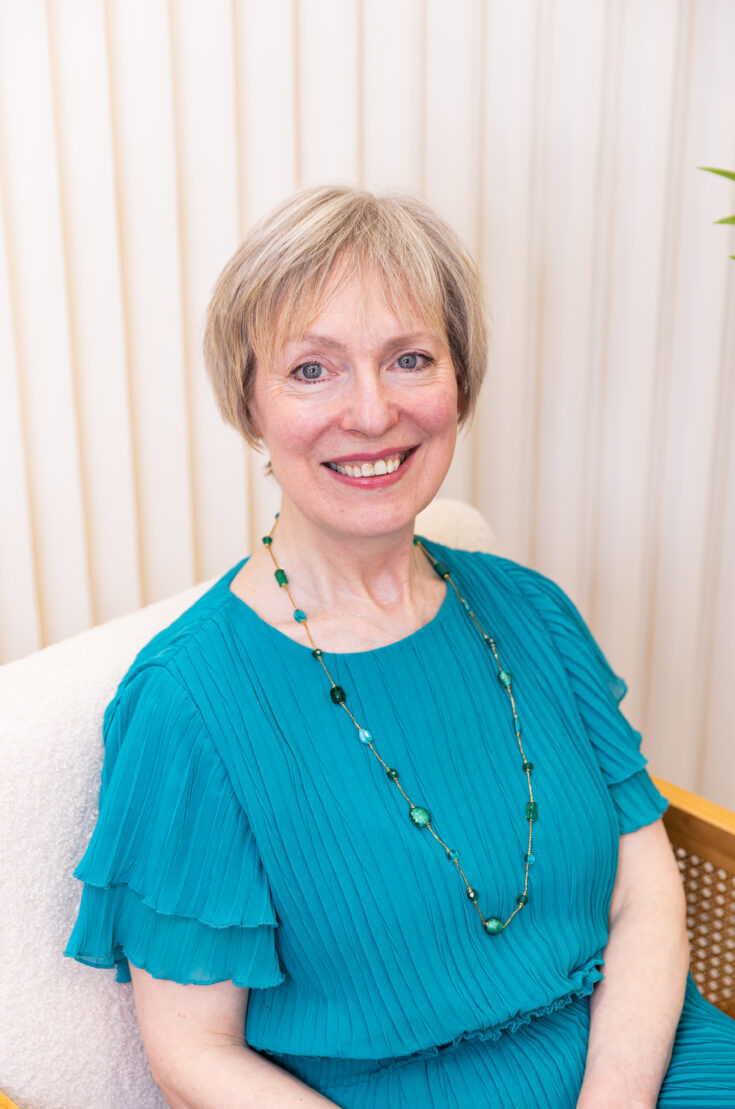
About Louise Macdonald
Louise began her singing career at Scottish Opera. After winning the Young Singers’ Messiah Competition, she performed alto solos in Handel’s Messiah at Glasgow’s Royal Concert Hall. Awards include The Honeyman Scholarship to New York and Philadelphia, Scottish Arts Council Bursaries to study in Finland and Germany and The Hope Scott Trust Award for a recital in London.
Her performing highlights include the critically acclaimed Mary Queen of Scots Concert, premiered in Glasgow, then the Oxford Lieder Festival and Edinburgh Fringe. She performed Brahms’ Songs for Alto, Viola and Piano with Malcolm Martineau OBE and Scott Dickinson, at the RCS. Louise has given concerts in Paris, Geneva and throughout the UK.
She brings her love of life, enthusiasm and creativity to her teaching. She has a private teaching practice and has worked within many community and school settings with groups including neurodiverse children, young people and adults. Her current passion is to help women of all ages and experience, whose voices are changing, to know that they are important and can gain confidence, singing into their mature years.
ABSTRACT For AOTOS Summer Conference 2026
Why postmenopausal women give up singing and why we mustn’t give up on them!
Many women in their sixties and seventies, even into their eighties, who once enjoyed choral singing, are giving up. There is a range of reasons and consequences. Uneven, unpredictable tone, loss of range, loss of friendships and social circle within their choir often leads to low mood, isolation, depression and exacerbation of physical symptoms because of stress and higher cortisol levels.
I have been running a series of workshops since June 2025 to help women with vocal wellbeing as they age, in a safe, nurturing space. I have also been performing and teaching for 40 years. I have lived experience of full recovery after thyroid surgery when I was perimenopausal, giving me the knowledge and authority to guide many older women back to vocal health.
Here are some of the areas I have been working on with mature women, in a holistic way, at workshops that last one hour.
The biggest barrier to progress is judging themselves and their voices, so we always practise Kind Internal Self Talk. I do specific work to help them connect with confident posture first, then lower abdominal and pelvic floor release on the inhalation and gentle engagement on the exhalation. Once this is established, we can gradually add other areas of the body and vocal mechanism. Most commonly I see tight jaws and root tongue tension. I use a Feldenkrais exercise *(1) to give the brain the message that it is safe to release the jaw and tongue.
Here are the format and themes of our workshops
- Gentle movement combined with the breath, to release stress and promote a healthy nervous system.
- A singing game or round to have fun and create community.
- Breathing and vocal technique on a given topic each month.
- Singing a new song each month, in harmony, applying what we have learned.
Themes in the first series of workshops:
- Posture/Breathing and Pelvic Floor Release
- Tongue release/Breathing and PFR
- Optimum position of the jaw/Breathing and PFR
- Lifting the soft palate/Breathing and PFR
- Strong consonants connecting with vowels for musical expression/Breathing and PFR
The results are astounding. Women on the verge of giving up, who come to workshops or who then have even a few lessons are seeing increased vocal range, reduced and eliminated physical pain, restored genito-urinary function, confidence restored, and return to singing communities. It is encouraging to know that as we release the taboo about vocal issues, postmenopausal women can keep singing well throughout their lives.
Reference:
*(1) Emma Alter – https://themovingbrain.com/feldenkrais-for-musicians/
Bibliography:
Singing Through Change, Nancy Bos, Joanne Bozeman, Cate Frazier-Neely ( Studiobos Media, 2020)
The Technics of Bel Canto, GB Lamperti (Martino Publishing, Mansfield Centre, CT, 2012)
Dr. Martha Beck, Sociologist; proponent of KIST (Kind Internal Self Talk)
https://marthabeck.com/beyond-anxiety/
Beyond Anxiety, Curiosity, Creativity and Finding your Life’s Purpose (Penguin, Random House 2025)
Dr. Richard Schwartz
https://ifs-institute.com/about-us/richard-c-schwartz-phd
No Bad Parts – Healing Trauma and Restoring Wholeness with The Internal Family Systems Model, (IFS) Dr. Richard C. Schwartz (St, Martin’s Essentials and Sounds True, USA, UK publisher – Vermillion, an imprint of Ebury Publishing, 2021)
Dr. Stephen Porges
https://www.stephenporges.com/about
https://www.stephenporges.com/articles
The Polyvagal Theory: Neurophysiological Foundations of Emotions, Attachment, Communication and Self-regulation (Norton, 2011)
The Pocket Guide to The Polyvagal Theory: The Transformative Power of Feeling Safe (Norton, 2017)
Dr. Arielle Schwartz
Founder of The Center for Resilience Informed Therapy
The Post-Traumatic Growth Guidebook: Practical Mind-Body Tools to Heal Trauma, Foster Resilience and Awaken Your Potential (PESI Publishing and Media, 2020)